
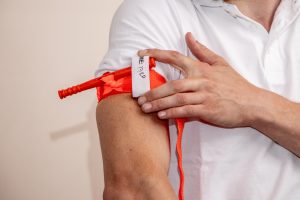
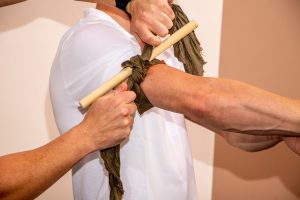
Applying a tourniquet - step by step
- Apply the tourniquet directly to the skin, 5-7 cm above the source of bleeding
- Make sure the tourniquet is around a part of the limb that is between the source of bleeding and the heart. For example, if the wound is on the forearm, apply the tourniquet to the upper arm. Avoid placing it over the knee or elbow joint
- If it is not possible to expose the skin, wrap the tourniquet over the top of the clothing. If clothing or other items bunch up when trying to wrap the tourniquet around them, flatten them out as much as possible
- If the casualty is conscious, tell them that the following step may be very painful
- Twist the windlass on the tourniquet gently to the right to further tighten the tourniquet. Turn the windlass until the bleeding stops
- Once the bleeding substantially slows or stops, secure the windlass by attaching it to the windlass clip on the tourniquet. If the tourniquet has a velcro strap, wrap it around the windlass to further secure it
- Make sure someone has called 999/112 for emergency help
- Take note of the exact time the tourniquet was put on by writing on the tourniquet itself, or on the casualty's body, or by recording it on a phone or device. If a tourniquet is left on for too long, nerve and tissue damage can occur.
- Continue monitoring the bleeding
- If the casualty is conscious, reassure them and try to keep them awake
- When the emergency services arrive, let them know how long the tourniquet has been in place
NEVER be tempted to loosen or remove a tourniquet. Once applied, the removal of tourniquets should only ever be done by a medical professional.